


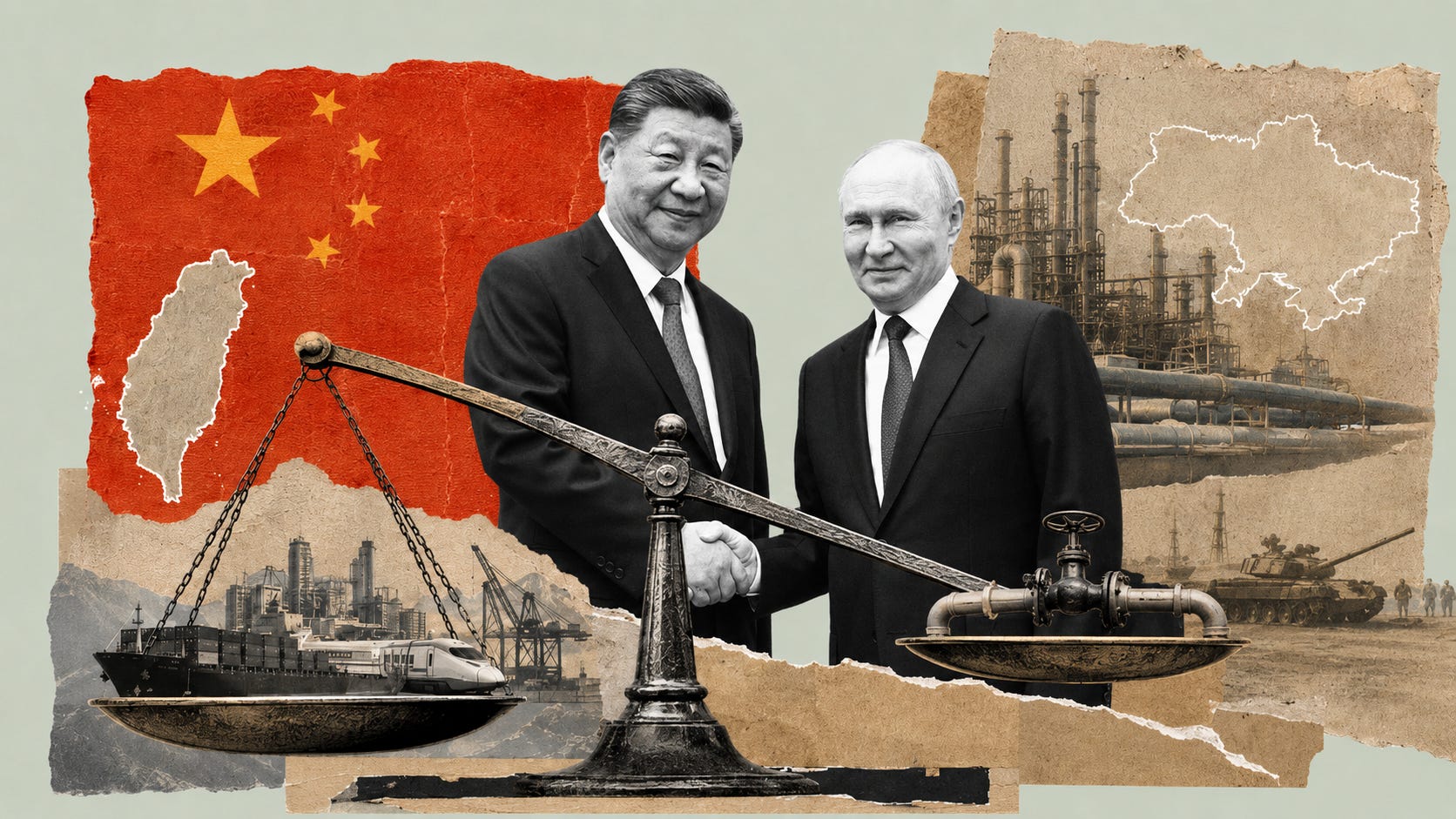
Having lived in both Moscow and Beijing, you come to learn that both Russia and China have their own forms of exceptionalism. But both share a commonality: each sees itself as a civilization whose power was interrupted, misread, or contained by the West, and each treats foreign policy as a project of historical correction. That does not make Moscow and Beijing equal partners, or even innate allies. Russia wants recognition for the space it believes history entitles it to command. China wants restoration to the centrality it believes history always promised. And these drivers shed light behind conversations in state meetings like Vladimir Putin’s visit to Beijing last week —
Key Takeaways
Russia came seeking progress on a major new energy pipeline deal. China did not sign a final commercial contract, and it did not need to.
Bilateral trade reached about $228 billion in 2025, down from its 2024 peak but still structurally significant.
The partnership is real, but the power balance is increasingly lopsided.
Putin secured visible diplomatic solidarity and language favorable to Moscow on
Ukraine. Xi preserved leverage over energy pricing, trade terms, and the pace of any deeper commitment.
No final Power of Siberia 2 contract, no Ukraine settlement framework, and no formal alternative international order emerged from the summit.
Vladimir Putin arrived in Beijing on May 20, 2026, for his latest summit with Xi Jinping — and the optics, as always, were impeccable. A red-carpet reception. A joint press appearance with both leaders speaking of friendship, strategic partnership, and a shared vision focusing on building a “multipolar world and a new type of international relations.”
But beneath the theater, this was a summit defined as much by what didn’t happen as what did. Russia came looking for a major new energy deal. China offered symbolic alignment, continued negotiations, and no final pipeline contract. And both sides left reinforcing a partnership that has become one of the defining geopolitical arrangements of the decade — even if it remains, at its core, asymmetric.
Here’s what actually happened, why each side showed up, and what the outcomes mean for the rest of the world.
Why Putin Came to Beijing
Russia’s position entering this summit was straightforward: it currently needs China more than China needs it, and everyone at the table knew it.
Three years into the Ukraine war, Western sanctions have reshaped Russia’s economic geography. European energy markets — once Moscow’s primary revenue source — are largely closed. The Russian economy has survived through a combination of oil and gas sales redirected toward Asia, yuan-denominated trade, and a wartime industrial footing that prioritizes short-term output over long-term productivity.
By 2025, bilateral trade between Russia and China had reached nearly $240 billion annually, with the overwhelming majority of transactions settled in rubles and yuan rather than dollars or euros. The exact share varies by source and measure, but the direction is clear: Russia has become an important test case for China’s cultivation of local-currency trade architecture.
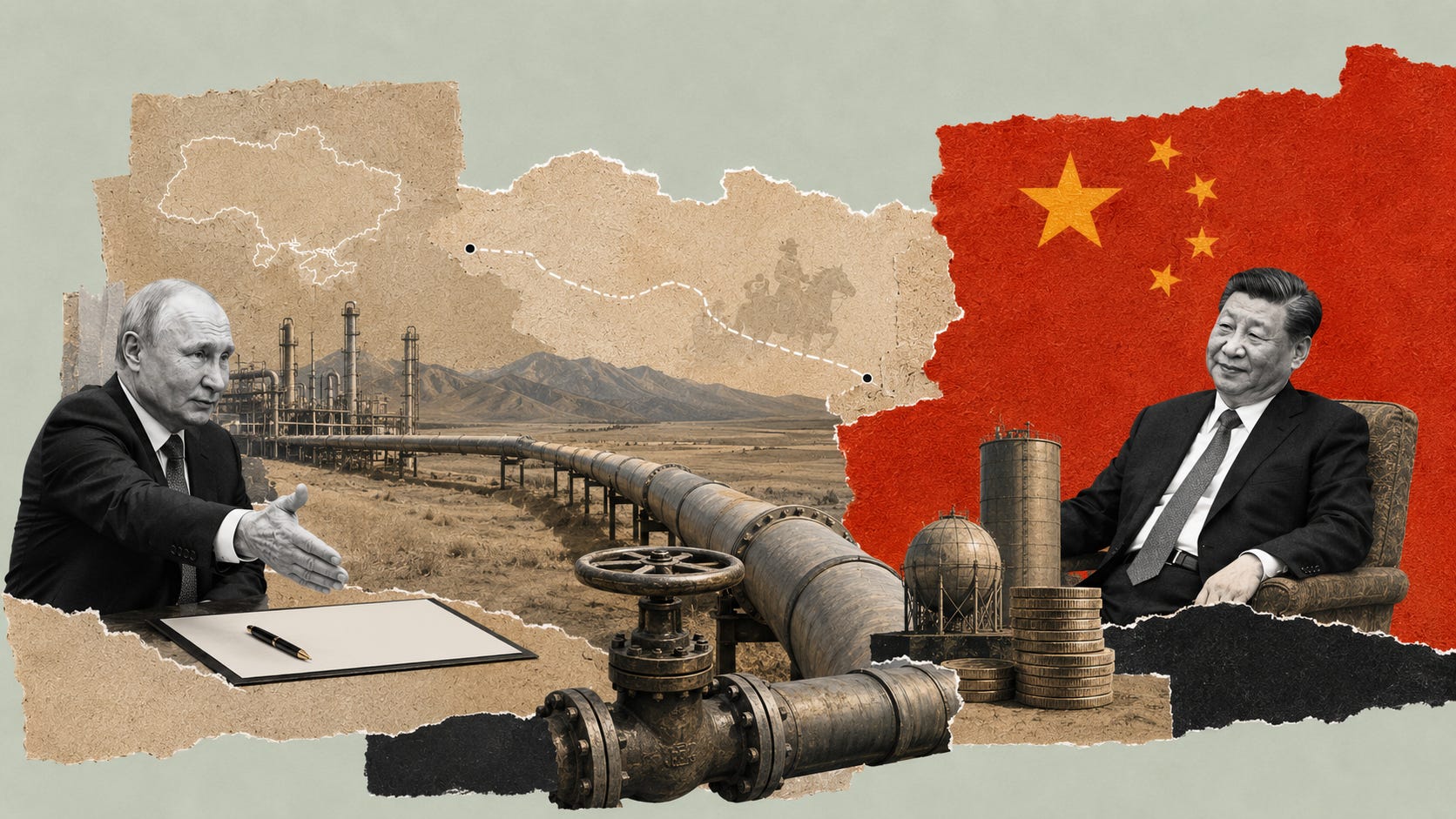
Putin’s primary ask at this summit was the Power of Siberia 2 pipeline. The proposed route would carry Siberian natural gas through Mongolia into China — estimated to move up to 50 billion cubic meters annually, potentially worth tens of billions of dollars per year to Gazprom. For Moscow, this isn’t just an energy deal — it’s an economic lifeline with a 30-year horizon and a functional replacement for the European market it has lost.
But the deal remains unresolved. The Kremlin said there was a general understanding on the project, including the route and construction approach, but pricing, timetable, and other commercial terms were still not finalized. No formal oil or gas agreement was announced during the visit.
Beyond energy, Putin wanted something less tangible but equally important: legitimacy. With Western governments treating Russia as a pariah state, and with Ukraine peace negotiations grinding through various international formats, the optics of standing beside Xi Jinping carries real value as Putin is reportedly facing disapointment at home. This summit was, in part, a message to the West that Russia has not been isolated. It has simply reoriented.
Putin also came looking for coordination on Ukraine diplomacy. With the United States under Trump pursuing its own ceasefire framework, Moscow needed to ensure that Beijing’s position — officially “neutral,” practically supportive — remained aligned with Russian interests in any eventual settlement.
What Xi Wanted
China’s posture was more comfortable and calculated.
Xi Jinping arrived at this summit from a position of relative strength. The US-China trade war, while damaging, had prompted Beijing to accelerate domestic industrial policy and diversify away from American technology dependencies. Russia, in this context, is simultaneously a useful partner, a managed liability, and a lesson in what happens to a country that overplays its hand geopolitically. And China has options.
China’s core interests at this summit were threefold.
First, energy security on favorable terms. China wants Russian gas — but only at a price that reflects China’s leverage, not Russia’s desperation. The Power of Siberia 2 negotiation has stalled repeatedly on exactly this point: Moscow wants pricing close to what it once received from European buyers; Beijing knows it is now Russia’s only realistic customer and negotiates accordingly. China did not sign a final deal at this summit. Russia confirmed talks would continue. That outcome, from Beijing’s perspective, is the correct one: the pipeline will eventually get built, but on terms that Beijing dictates.
Second, a credible counterweight narrative. The joint statement issued after the summit spoke of a “multipolar world,” opposition to “hegemonism,” and the need to reform international governance structures. This language has appeared in every Xi-Putin joint communiqué for the past several years. But in the current environment of arguably US-led global volatility, it carries greater meaning. Russia uses it to show that Western isolation and leadership has limits. China uses it to position itself as a leader of a broader non-Western diplomatic order without assuming the full costs of Russia’s war.
Third, precedent for local-currency trade architecture. With nearly all Russia-China trade now settled outside the dollar system, Beijing is using this bilateral relationship as a testing ground for the kind of financial infrastructure it wants to build more broadly — within BRICS, across the Global South, and eventually as an alternative settlement layer to SWIFT. Russia is the stress test. This allows Beijing to observe how alternative settlement mechanisms function under sanctions pressure. This does not yet amount to a replacement for the dollar system, but it is a proof of concept China can study and selectively expand.
What They Agreed On
The summit produced a joint statement and dozens of documents spanning trade facilitation, digital commerce, biosecurity cooperation, scientific exchange, and environmental standards. Both leaders renewed the foundational “Treaty of Good-Neighbourliness and Friendly Cooperation” and pledged coordinated action within BRICS, the Shanghai Cooperation Organization, and the United Nations.
On Ukraine, the joint language was carefully calibrated. Neither side explicitly endorsed Russia’s military objectives, but both called for a settlement that addressed “the root causes of the conflict” — diplomatic code for opposing NATO expansion and rejecting any outcome that Russia perceives as a defeat. China reiterated its nominally neutral position while declining to condemn Russian actions, a stance it has maintained throughout the war and that the West has repeatedly challenged.
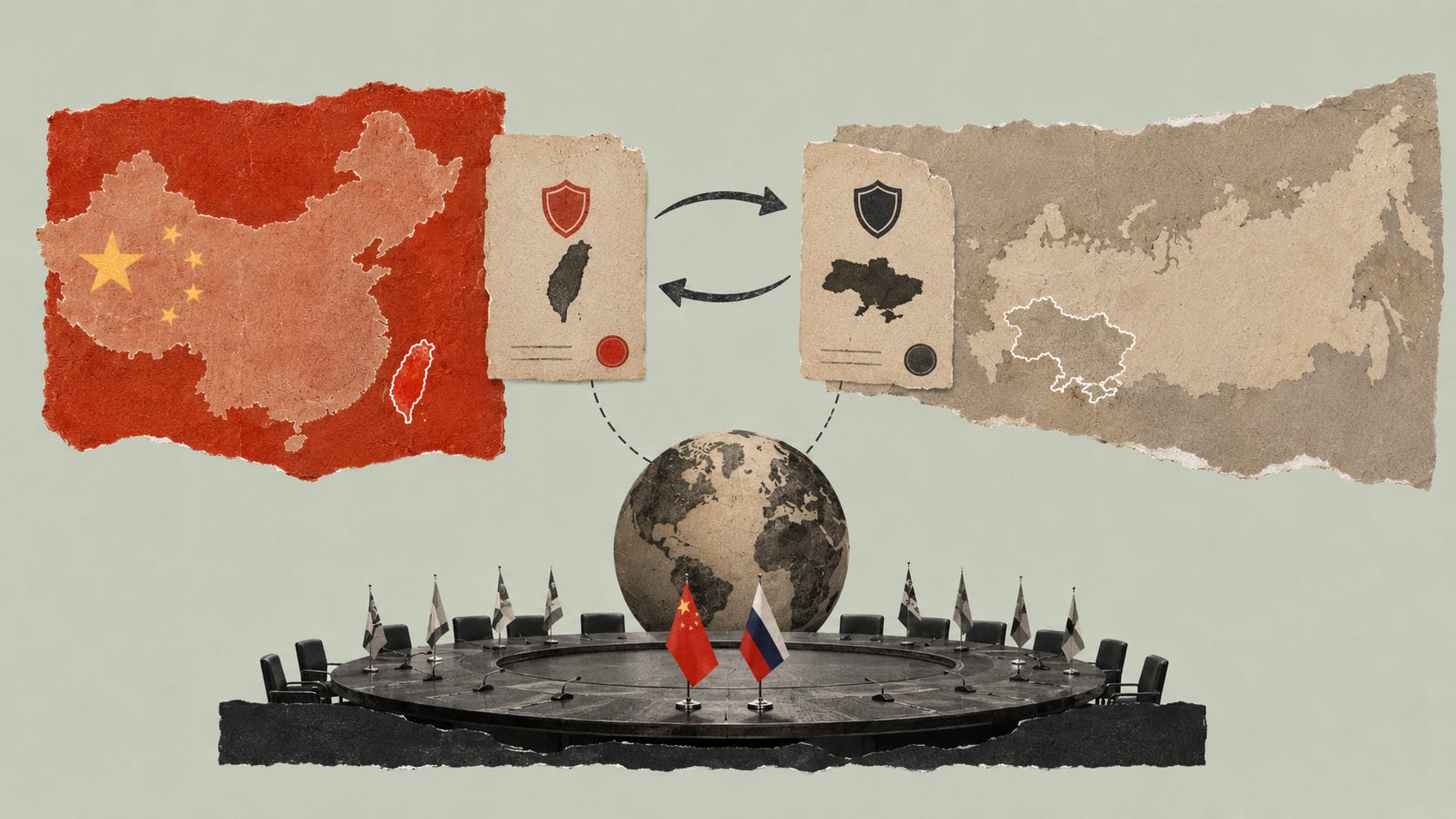
On Taiwan and Ukraine — the unspoken trade. Russia reiterated its support for China’s “one China” principle, as it has at every summit since 2022. In exchange, China provided implicit diplomatic cover for Russia’s position in Ukraine. The exchange is not stated explicitly in any joint document, but it does not need to be. It is the durable underlying logic of the entire relationship: each side legitimizes the other’s core territorial claim, and neither asks the other to do more than that.
The Gazprom announcement — a “legally binding framework” for continued gas supply talks — was the closest thing to a pipeline breakthrough. It is not a signed contract, but it is a signal that the Power of Siberia 2 negotiation has moved past the preliminary stage. Analysts noted it carefully: the deal will likely get done, probably within the next 12 to 18 months, and when it does, it will represent a significant long-term shift in global gas markets.
The Asymmetry Nobody Mentions Out Loud
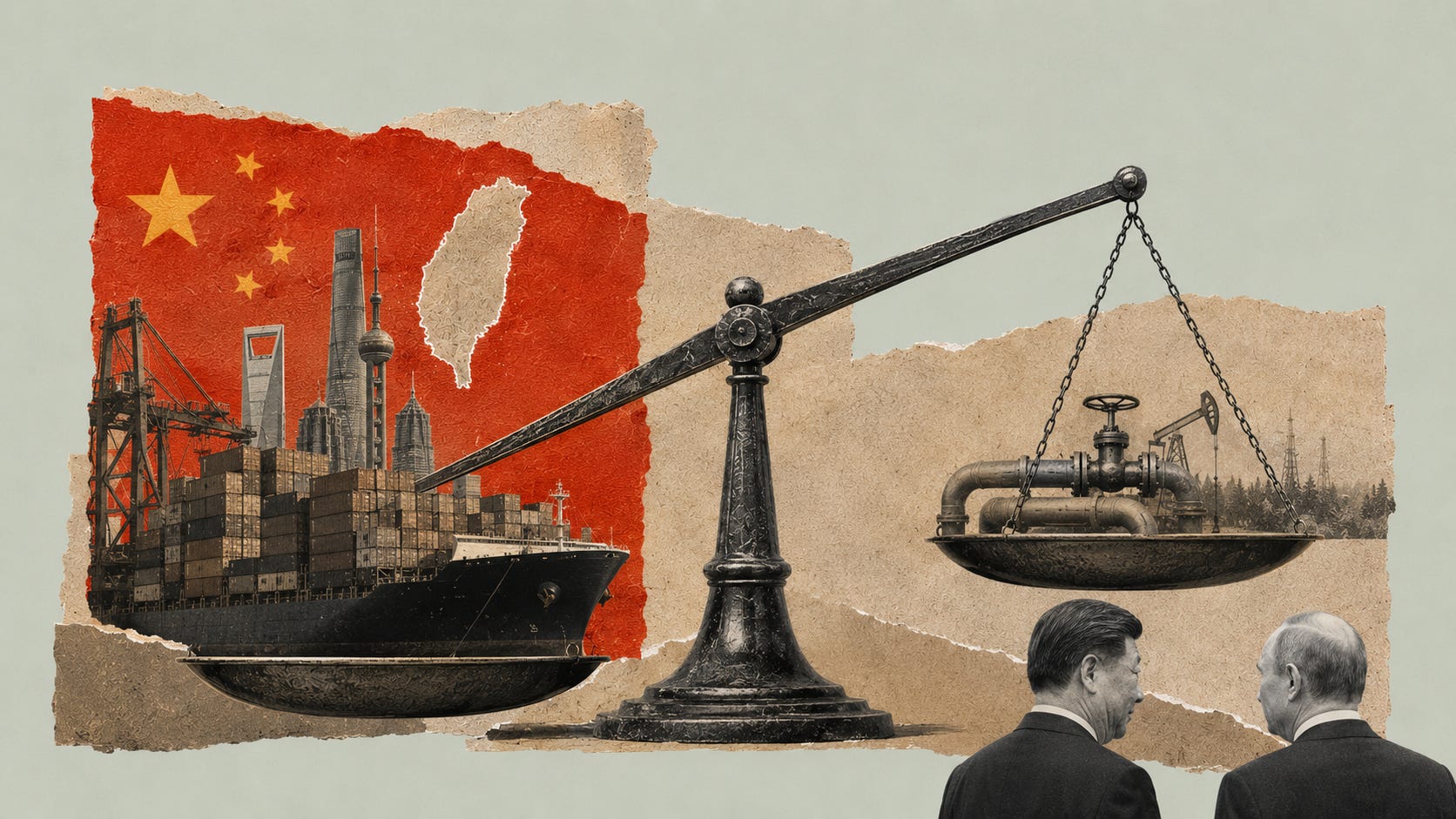
The most important subtext of this summit — the one neither leader addresses in public — is that Russia and China are not equal partners. They are aligned partners with a significant and growing power imbalance.
Russia’s economy is approximately one-tenth the size of China’s. Its technological base has contracted under sanctions. Its military is bogged down in a war that has consumed resources and revealed significant structural weaknesses. Putin needs this relationship more acutely with every passing year. Xi, by contrast, has options.
Beijing is careful not to embarrass Moscow over this. The optics are managed precisely because the substance is delicate. But analysts who watch this relationship closely note that China has been quietly expanding its leverage: insisting on yuan pricing in bilateral trade, delaying the pipeline deal to maximize its negotiating position, and maintaining official neutrality on Ukraine in a way that preserves Chinese credibility with European trading partners that Moscow has already burned.
The timing reinforced the message. In the space of roughly two weeks, Xi received Iranian Foreign Minister Abbas Araghchi, Trump, and Putin. Each arrived with different needs. Iran sought diplomatic backing amid regional tensions. Trump came to manage the world’s most consequential bilateral relationship. Putin came to shore up Russia’s most important remaining major-power partnership. Xi did not travel to them. They came to him. And this sequence of visits displayed Beijing’s clear diplomatic statecraft and narrative prowess — and Xi Jinping, almost certainly, prefers it that way.
What It Means Beyond Beijing
For Western policymakers, the May 2026 summit delivers a familiar but important message: the strategy of isolating Russia through sanctions has succeeded in damaging the Russian economy, but it has not succeeded in separating Moscow from Beijing. If anything, it has pushed Russia deeper into China’s orbit, on terms that benefit China.
For the Global South, the meeting reinforces the visibility of a bloc — however informal — that offers an alternative to Western-led institutions. BRICS expansion, yuan-based trade, and coordinated UN vetoes are practical tools, not just rhetoric.
For Ukraine, the joint statement’s language on “root causes” is a warning. China may not formally endorse Russia’s military objectives, but its diplomatic vocabulary remains closer to Moscow’s than Kyiv’s on the origins of the war. Any peace settlement will therefore need to account not only for Russia’s battlefield position, but for China’s economic and diplomatic weight.
And for the United States, watching Putin’s Beijing visit come so shortly after Trump’s own diplomatic travels, the summit is a reminder that Xi is playing a longer and more patient game than either Washington or Moscow — receiving each in turn, committing to neither fully, and accumulating leverage from both. Beijing has strengthened the perception that major powers now have to engage China, even when they oppose it.
The Bottom Line
The Beijing summit of May 2026 was neither the “no limits” moment of February 2022 nor a merely ceremonial encounter. It was a working meeting between two leaders who need each other for different reasons, at different intensities, and on a timeline that increasingly favors Beijing.
Putin got a show of solidarity, coordinated diplomatic language on Ukraine, and enough progress on energy talks to claim momentum. Xi got favorable trade terms, a reinforced multipolar narrative, and another data point in the proof-of-concept for de-dollarized trade infrastructure. And by hosting Trump, then Putin, within the same diplomatic window, Xi also got something harder to quantify: the image of a leader that every major power feels it must engage.
What neither Russia nor the West has found yet — and what the world is still waiting on — No pipeline contract. No Ukraine settlement framework. No formal architecture for the alternative international order both Beijing and Moscow keep describing in joint statements.
The Russia-China alignment is real. But the next phase of the relationship will likely be shaped less by shared ideology than by China’s patience, Russia’s narrowing options, and the widening gap between them.
Deep coverage of AI, innovation, global technology, China, US policy, and the hidden systems shaping power. Potentia features original analysis alongside interviews with founders, operators, policymakers, and leading thinkers building the future.