

Christian Hu of Qoder joins Potentia to discuss why the next phase of AI is moving beyond chatbots toward agentic workmates, how Qoder is building AI coding and productivity tools for global users, and why companies that wait too long to adopt AI may struggle to catch up.
Ten months ago, Alibaba launched Qoder — an agentic coding platform built in Singapore — into a market that has since become one of the most capital-intensive battlegrounds in all of tech. The question is no longer whether developers will use these tools. The question is which tools will coexist, which will get locked out, and what happens when the agent stops assisting and starts executing.
The Person Behind the Growth Strategy
Christian Hu, Head of Global Growth at Qoder
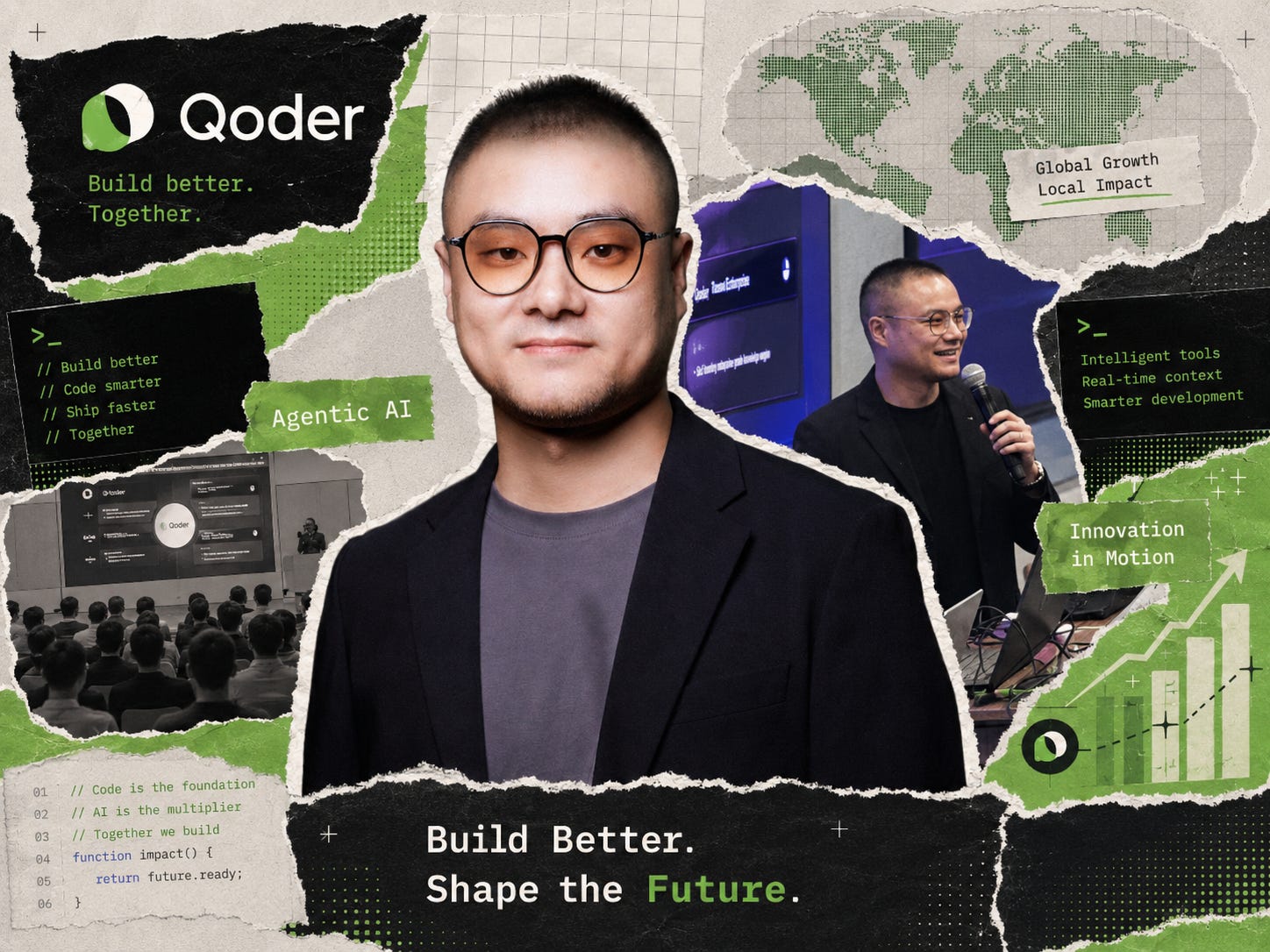
Christian Hu is Qoder’s Head of Global Growth. Before this, he co-founded and sold a startup in Singapore, then spent time at Alibaba. In this conversation, we get into how he leads growth, why Qoder chose local-first architecture when the entire industry is racing to the cloud, how communities became the engine for international expansion, and what it actually takes to compete in the global market. We also talk about the structural difference between a chatbot and an agent, the skills-as-knowledge framework that might be Qoder’s most underappreciated bet, and why enterprise buyers care about governance more than capability.
Carve Outs
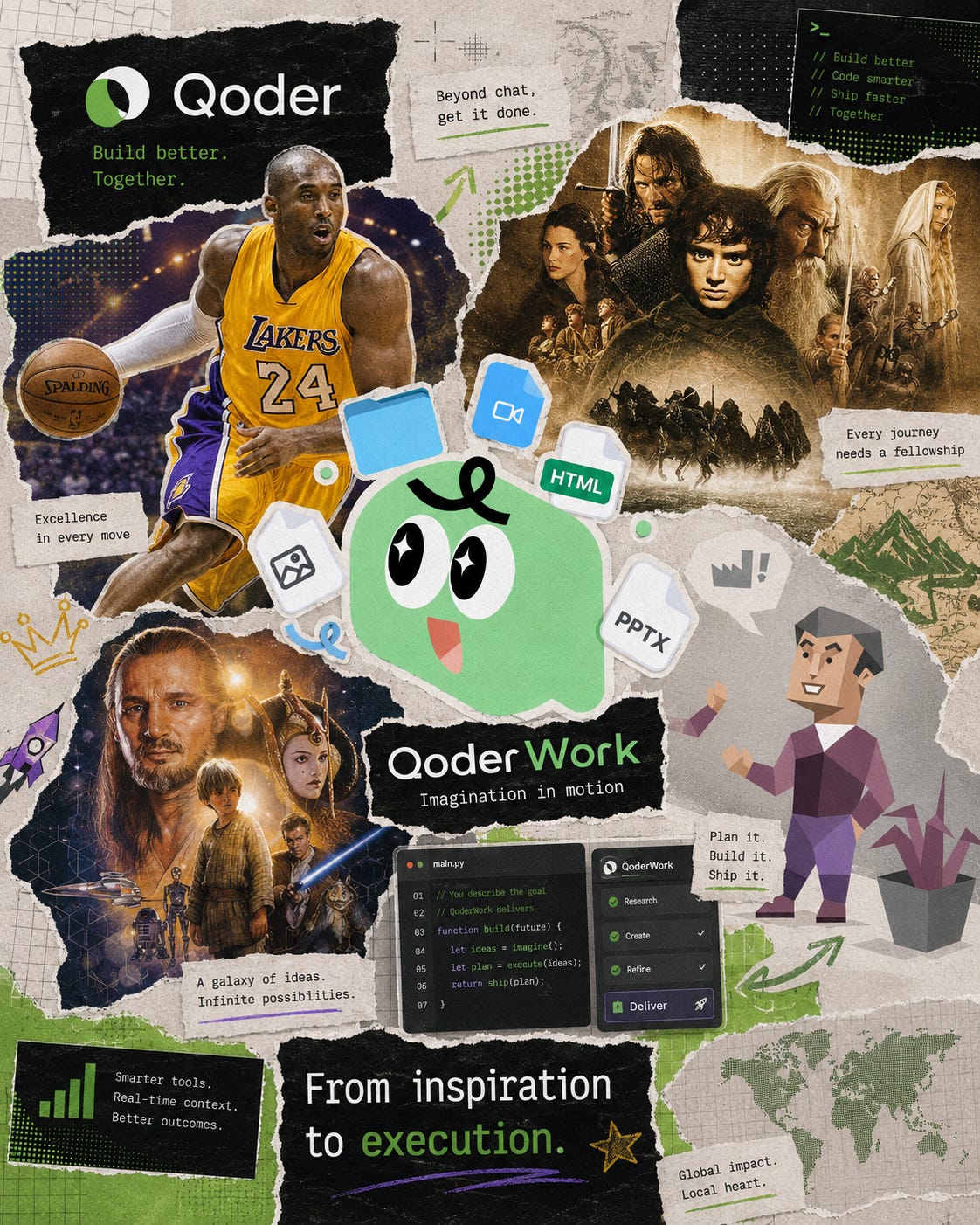
The Mamba Mentality: How I Play — Kobe Bryant’s personal breakdown of his approach to work, preparation, and relentless iteration. Christian brought up Kobe during the conversation — fitting for someone who’s shipped 30 product upgrades in 10 months while flying across five countries.
Star Wars — A favorite watch for Christian. The original trilogy, obviously. The prequels, debatable…
Lord of the Rings — The other rewatch. Extended editions only. Pro-human species.
ENTP — The Visionary — Christian’s Myers-Briggs type. Extroverted intuition, pattern recognition across domains, ability to connect seemingly unrelated ideas into a single framework. The same brain that sees a growth play in Tokyo will connect it to a community event in Seoul by the next morning.
水煮鱼 (Shuizhu Yu — Sichuan Boiled Fish) — Always cooking. If you know, you know. If you don’t, read the recipe and bring an appetite.
Qoder — The product itself. Free to try, local-first, runs on your machine.
More on the Episode
The AI coding tools market hit $7.88B in 2025 and is headed to $70B by 2034. Qoder — a Singapore-based agentic coding platform launched by Alibaba — is competing head-on against Cursor ($50B valuation), GitHub Copilot (4.7M paid users), Claude Code, and OpenAI Codex.
In an industry where every AI tool is racing to the cloud, Qoder went the opposite direction. In a market where nearly every competitor is cloud-native, Qoder’s QoderWork runs locally. Files stay on the user’s machine. No upload to third-party servers. This is not a throwaway design choice — it’s a direct response to enterprise procurement requirements. Large enterprises handling sensitive data (financial records, proprietary code, HR documents) often cannot clear compliance for cloud-based AI tools. Local-first eliminates that entire objection category.
Skills might be the most interesting bet in the space. Qoder lets anyone encode domain expertise into modular knowledge packages the agent can load. You don’t need to understand tax law or Kubernetes networking — someone else builds the skill, you install it. It turns the agent from a tool into a knowledge marketplace, and it’s a move no competitor has made at this scale.
Qoder’s origin and positioning. Qoder launched August 21, 2025. It offers “Agent Mode” for interactive pair programming and “Quest Mode” for autonomous, specification-driven development. Unlike traditional IDE plugins or autocomplete tools, Qoder positions itself as an agentic platform — meaning it doesn’t just suggest code, it understands intent, chains actions across tools, and executes multi-step tasks autonomously.
On politics, product, and letting users decide: One of the more candid moments in the conversation. When asked about the geopolitical elephant in the room — a Singapore-based AI coding product backed by Alibaba competing in Western markets — Christian didn’t dodge it: “I believe the users have their clear mind, right? They can understand the product. They can understand what kind of product can really help them improve their efficiency. Political is political. We cannot decide the way the politicians go, but we can decide what kind of product we can do. We will offer the most agentic and the most advanced agent to global users.”
On team and efficiency: Qoder grew from ~30 to ~150 people in 10 months, but Christian is explicit: they don’t want to become a large company. The thesis is that AI-native companies should practice what they preach — use AI internally to keep headcount lean and productivity high. The majority of the team remains developers and product designers. The growth/marketing team is deliberately small, with Christian personally covering international travel across five countries.
Global expansion and market differences:
United States: High AI penetration. Most developers are already using multiple tools. Sales conversations are about differentiation, not education.
Japan: Slower adoption, but strong developer curiosity. Many developers unfamiliar with AI agent capabilities but show genuine interest once exposed. Education-first go-to-market.
South Korea & China: Active community engagement. Events-driven growth.
Singapore: Home market. Qoder was built here with global-first intent from day one.
Competing with Cursor, Copilot, Claude, and Codex: Christian’s framing is coexistence, not displacement. His position: most individuals and enterprises will run multiple AI tools simultaneously. This tracks with what we’re seeing in the market — Cursor’s $2B ARR didn’t come from stealing Copilot users, it came from expanding the total addressable market. The AI coding tools market grew from $5.3B in 2024 to $7.88B in 2025. The pie is getting bigger faster than any single player can eat it. And the investor thesis has shifted. The market’s next phase will likely be determined by reliability rather than capability.
Follow Along
Try Qoder: free to get started, local-first, no cloud upload required. Or contact chelsea@potentiamedia.org to connect with the team.
Potentia Podcast: Subscribe wherever you get your podcasts. Follow us on social for clips, behind-the-scenes, and guest announcements.
Christian Hu: Follow his journey across markets and communities on X and LinkedIn.
This episode was recorded in May 2026. Market data reflects figures available at time of recording.