
Overview
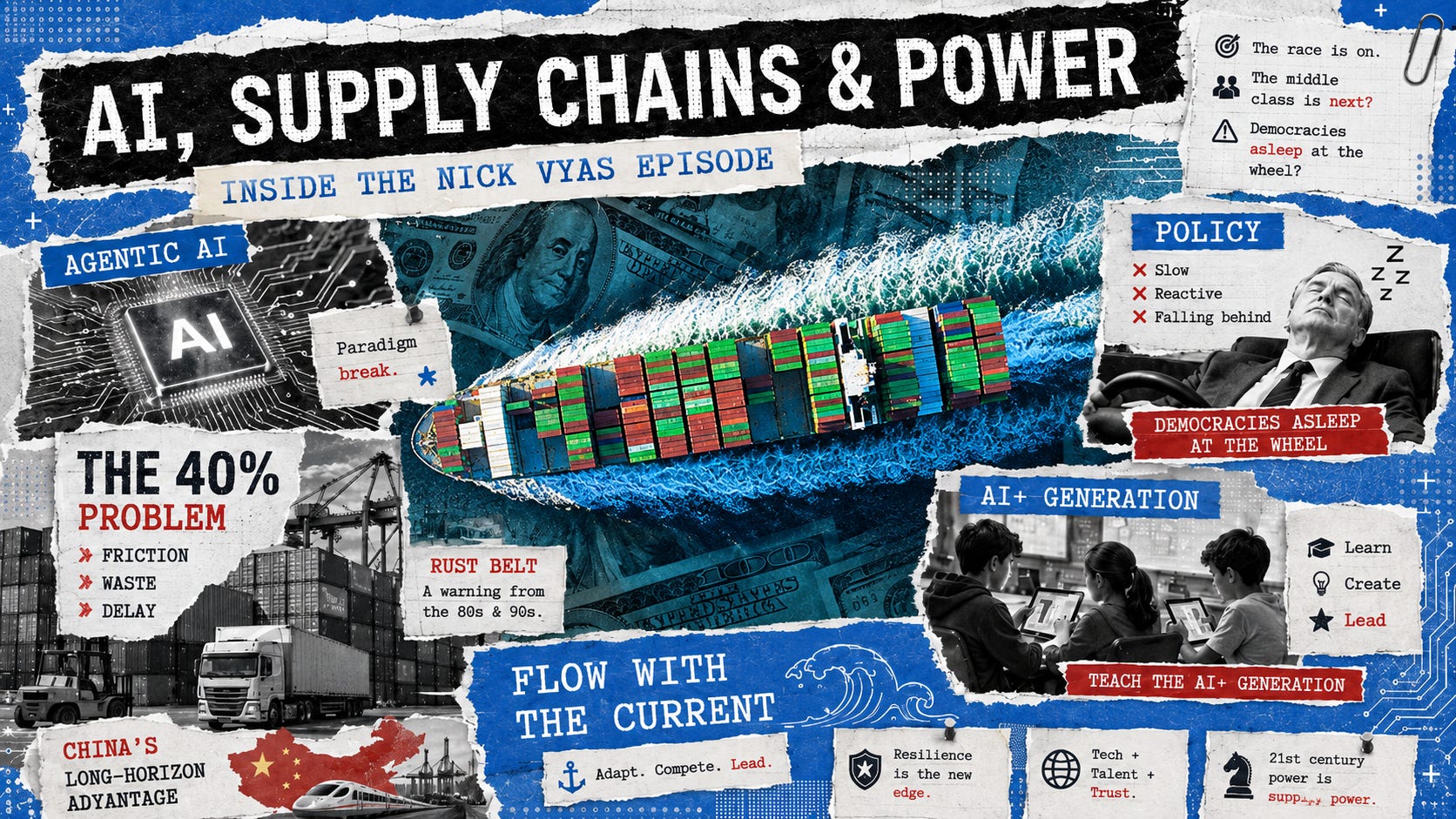
Nick Vyas has led global supply chains for Sears, Toys R Us, and Duty Free, built USC Marshall’s supply chain institute from the ground up, and is currently leading six case studies on agentic AI where the technology outpaces drafts before the team can finish them. He calls what’s happening right now not a paradigm shift but a paradigm break, because every transformation before this one still had a human at every node while this one doesn’t. The world produces enough food to feed everyone on earth, yet 40% of it rots between the farm and the table because the supply chain can’t move it. Democracies are structurally incapable of the long-horizon planning this moment demands, though China has been executing on a 45-year-long nine-cycle strategy without interruption. And AI is about to displace more white-collar jobs than any previous technology in history, but policymakers are falling asleep at the wheel, repeating the exact mistake of the Rust Belt, except this time the middle class will be hit hard.
Tune in for one of the sharpest, compelling and deep conversations we’ve had on Potentia. We hope you enjoy it as much as we did.
"We know the implication of outsourcing manufacturing in the 80s and 90s, we missed the opportunity to reskill and redeploy those workers. I have a genuine fear we're about to make the same mistake. Except this time it hits the middle class."— Nick Vyas
Guest
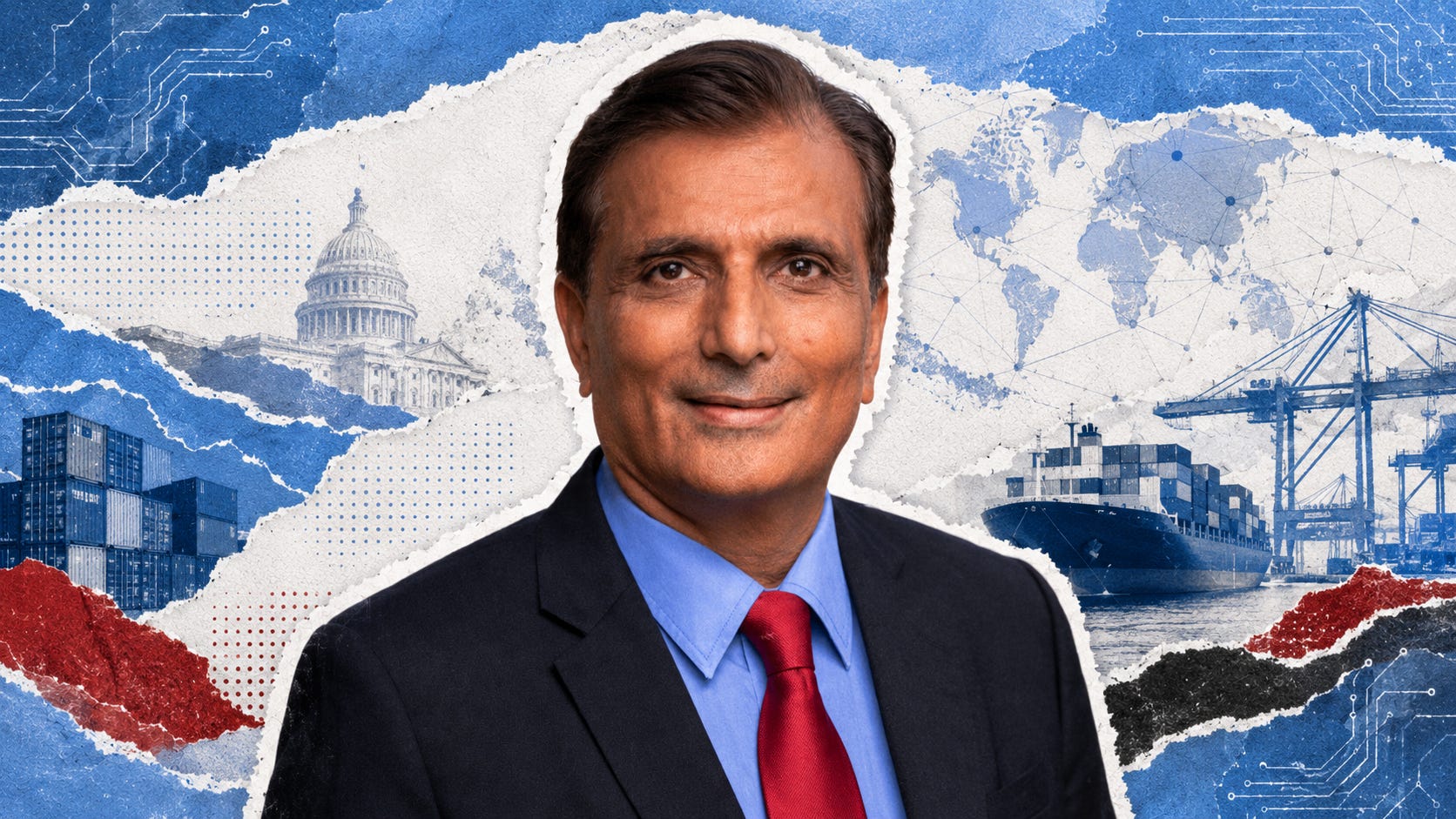
Nick Vyas, Founding Executive Director, Randall R. Kendrick Global Supply Chain Institute, USC Marshall School of Business. Author, adjunct professor, and advisor to Fortune 500 companies and VC-backed supply chain startups.
Carve-outs
Nick: The Caltech Time Traveler event, four hours with quantum physicists and astrophysicists. Recommended dosage: once in a while, to remember how small your case study problem actually is.
Nick: The Rust Belt as historical case of warning. In the 1980s and 1990s, globalization, automation, and the offshoring of manufacturing hollowed out industrial communities across the Midwest and Northeast. The deeper failure was not just that jobs left. It was that policymakers treated the disruption as inevitable and moved too slowly to reskill and redeploy workers. His warning: AI could repeat that mistake, only this time the shock moves beyond factory floors and into the middle class.
Chelsea: The Craftsman houses of Pasadena. American Craftsman woodwork, stained glass, and heavily shaded lamps. The shading wasn’t just aesthetic. Early residents were afraid of electricity. An interesting point when we consider fear toward AI, though the technologies are inherently different.
Chelsea: Rabindranath Tagore. “The stars are not afraid to appear like fireflies.” On shining brilliantly without attachment to the outcome in the limited time we have.
Chelsea: Meetings in Washington D.C. in December and January, and the unsettling feeling of watching the country abandon its leadership position on AI with no clear vision, only complaints.
Key points
Technology: Agentic AI and the paradigm break
Supply chain: Friction, waste, and the 40% problem
Policy: Why democracies fall asleep at the wheel
Education: Teaching the AI plus generation
Geopolitics: China’s long-horizon advantage
Philosophy: Flow with the current, not against it
Links
RSS feed, listen on Apple, Spotify and anywhere else you get your podcasts!