
Week of June 8-15, 2026 | Briefing # 3
Welcome to the third edition of This Week in Power, a Potentia weekly briefing on the stories that actually matter at the intersection of AI, technology, geopolitics, and the people pulling the levers.
Here’s your briefing on what happened, why it matters, and what it tells us about where power is shifting.
Six major stories this week covering how power exercised and contested on multiple fronts. The US and Iran agreed to end their war. Anthropic released its most powerful AI model, apologized for how it handled the safety guardrails, then watched the US government ban it for foreign users, all within five days. Xi Jinping visited Pyongyang and said nothing about North Korea’s nuclear program. SpaceX raised $75 billion in the largest IPO ever. Trump floated government ownership stakes in AI companies. Inside Meta, 1,600 engineers signed a protest letter calling their AI unit a “gulag.” And some LOTR metaphors by Dario and me.
Let’s get into it.
This Week’s Agenda:
1. US-Iran Peace Deal. War ends (sort of?), Strait of Hormuz reopens, nuclear questions unresolved
2. The Anthropic Gauntlet. Claude Fable launches, guardrails backfire, Anthropic apologizes, Dario publishes policy manifesto, US government blocks both models
3. SpaceX IPO, $75B raise, largest IPO in history, Musk becomes first trillionaire
4. Xi Jinping Visits North Korea. First trip in 7 years, nuclear weapons conspicuously off the agenda, China shores up its ally
5. Trump Wants Government Stakes in AI. US considers equity positions in frontier AI companies
6. Fail of the Week. Meta’s AI “gulag”: 1,600 engineers protest soul-crushing work conditions
The Iran Deal: War Ends (On Paper, At Least)
President Trump and Iran declared they had reached an agreement intended to end more than three months of war and reopen the Strait of Hormuz, the chokepoint through which roughly 20% of the world’s oil flows.
“The Deal with the Islamic Republic of Iran is now complete. Congratulations to all!” Trump wrote on Truth Social. Then, in characteristically Trump fashion: “Ships of the World, start your engines. Let the oil flow!” Trump also just met with Macron saying, ‘great things are going to happen’ with Iran deal.
This new deal comes after his first term when he scrapped Obama’s Iran deal, some argue out of spite.

Here’s what the deal is supposed to accomplish, based on reporting from US and Iranian officials (the full text has not yet been publicly released, though as of June 15 Vice President JD Vance says it has been digitally signed with full text to be released soon):
Immediate ceasefire extension for 60 days, during which a permanent deal will be negotiated
Reopening of the Strait of Hormuz- both the Iranian blockade and the US counter-blockade are supposed to lift on the day of signing. Iran has controlled the strait since shortly after the war began on February 28, when US and Israeli forces launched nearly 900 strikes in 12 hours targeting Iranian missiles, air defenses, and military infrastructure.
Israel-Hezbollah fighting in Lebanon is supposed to stop. Iran made this a condition for the deal. Though Israeli Defense Minister Israel Katz said Monday that Israel would keep troops in southern Lebanon indefinitely.
Formal signing is scheduled for Friday, June 19th in Switzerland, mediated by Pakistan with Qatar playing a supporting role.
What’s unresolved:
Iran’s nuclear program. Trump told the New York Times that Iran would be permitted low-level enrichment a dramatic reversal from his previous insistence on dismantling the entire program. Iran’s enrichment rights remain the core sticking point.
Frozen Iranian assets worth billions of dollars abroad, and the lifting of US/international sanctions, both still to be negotiated.
What happens if talks fail in 60 days: Trump told the NYT he could “relaunch attacks on Iran” or make the US “the guardian of the Middle East” in return for 20% of the region’s revenues.
Iran’s Deputy Foreign Minister called the deal “a victory.” Trump called it a win. European leaders from the UK, France, Germany, and Italy praised it. The UN Secretary-General called it a “critical step.” Everyone is claiming victory because everyone needs this to work. The Strait of Hormuz closure has been devastating the global economy for months, oil prices have been crushing consumers, and neither side can afford to keep fighting indefinitely.
But the hard parts are all ahead. This is a ceasefire extension with a framework, not a peace. The nuclear question, the original reason Trump cites for launching the war, is unresolved. Israel is not directly involved and has reservations. And the 60-day clock starts Friday.
The Anthropic Gauntlet: Fable, the Guardrail Disaster, the US Block, and Dario’s Manifesto

This is the story of the week in AI, and it’s really five sub-events braided together. Let’s walk through the timeline.
June 9: Claude Fable 5 Launches. Anthropic released Claude Fable 5 a public version of its feared and restricted Mythos model, designed with safety guardrails to make it safe for general use. Think of it as Mythos with training wheels: the raw capability is there, but Anthropic added guardrails specifically around cybersecurity and biology topics to prevent misuse.
This was supposed to be the big moment. After months of restricting Mythos to a small consortium through Project Glasswing, Anthropic was finally giving the world access to Mythos-class capabilities.
June 12: Dario Amodei Publishes “Policy on the AI Exponential”. The document covers five areas: regulation and public safety, macroeconomics and tax policy, scientific innovation, the balance of power between state and society, and geopolitics. It opens with a Lord of the Rings metaphor, the Hobbits trying to rouse the slow-moving Treebeard to defend his forest, while the trees operate at a completely different speed than the threat. That’s Amodei’s frame for AI and government: the technology moves at lightning speed, and policy institutions move like sentient trees.
The key proposals:
An “FAA for AI”: Mandatory third-party testing of frontier models for four specific risks, cybersecurity, biological weapons, loss of control, and automated R&D acceleration. The government would have the power to block deployment if risks are unacceptable. Third-party evaluation could be done by a government agency (similar to the FAA) or authorized private organizations.
Job displacement framework: Wage insurance, retention tax incentives, workforce training, and, if displacement becomes permanent, universal basic income financed through taxes on AI companies or capital gains. Anthropic is providing “substantial financial backing” for this framework. Amodei writes explicitly that “fast economic growth should create the tax base for shared prosperity.”
Geopolitical coalition: Democracies should form an AI alliance, sharing chips and semiconductor equipment within the coalition while denying it to adversaries, coordinating safety standards, and sharing AI’s benefits. “A nation that possesses powerful AI facing one without it... could be the equivalent of an army of World War II Marines facing an army of medieval swordsmen.”
Civil liberties protections: Ban domestic autonomous weapons. Close the bulk data collection loophole. Guarantee citizens access to AI advice during adverse government action, effectively ensuring the government can’t use AI against you while denying you the same tools.
Amodei is effectively arguing that the era of voluntary guardrails is over and that formal, government-enforced regulation is now necessary, and urgent.
He also rejects the framing of public concern as a “PR problem.” As he writes: ”People are worried about AI because they correctly perceive that its risks are real, not because AI CEOs have been insufficiently Panglossian.”
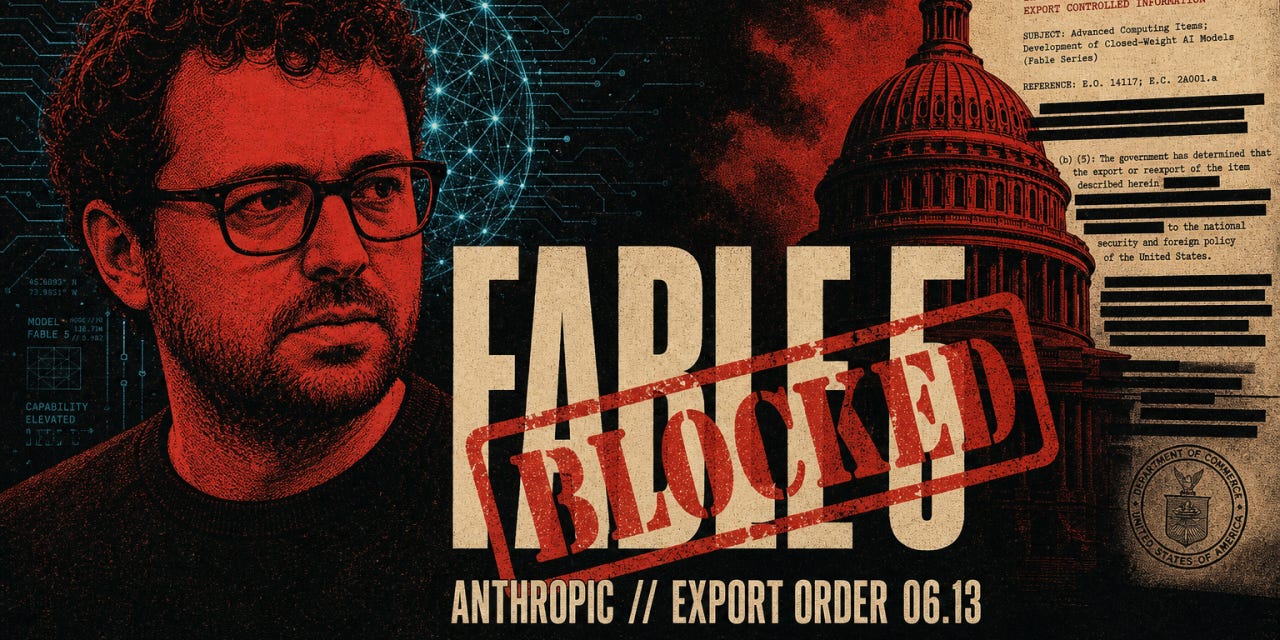
June 12-13: The US Government Blocks Fable and Mythos. On June 12th, the US Commerce Department issued an export control directive ordering Anthropic to immediately suspend access to both Fable 5 and Mythos 5 for all foreign nationals, citing national security concerns.
Anthropic complied and disabled the models. Other Claude models, including Opus 4.8, remained available. But the two most capable models in Anthropic’s arsenal, the ones representing the frontier of what AI can do in cybersecurity and scientific research, went dark for anyone who isn’t an American citizen.
So what does this mean in practice? The US government just classified Mythos-class AI capabilities alongside weapons-grade technology for export control purposes. This is a precedent-setting move. It treats frontier AI models not as software products but as strategic assets, the same category as advanced semiconductors and military hardware.
The implications are enormous. If the US starts treating AI models as export-controlled technologies, every frontier lab faces similar restrictions. It creates a bifurcated AI world: one tier of capabilities for Americans and trusted allies, another for everyone else. And it raises the question Dario Amodei’s essay asked just hours before the order dropped: how do democracies share AI’s benefits while denying it to adversaries?
The answer, apparently, is that they don’t, at least not yet. But not uncommon with what we’re seeing in say China’s approach as well for national security and industrial competition interests.
SpaceX IPO: $75 Billion, a Trillionaire, and a New Ticker
On June 12th, SpaceX made its market debut on the Nasdaq under the ticker SPCX — and it was everything the hype promised and then some.
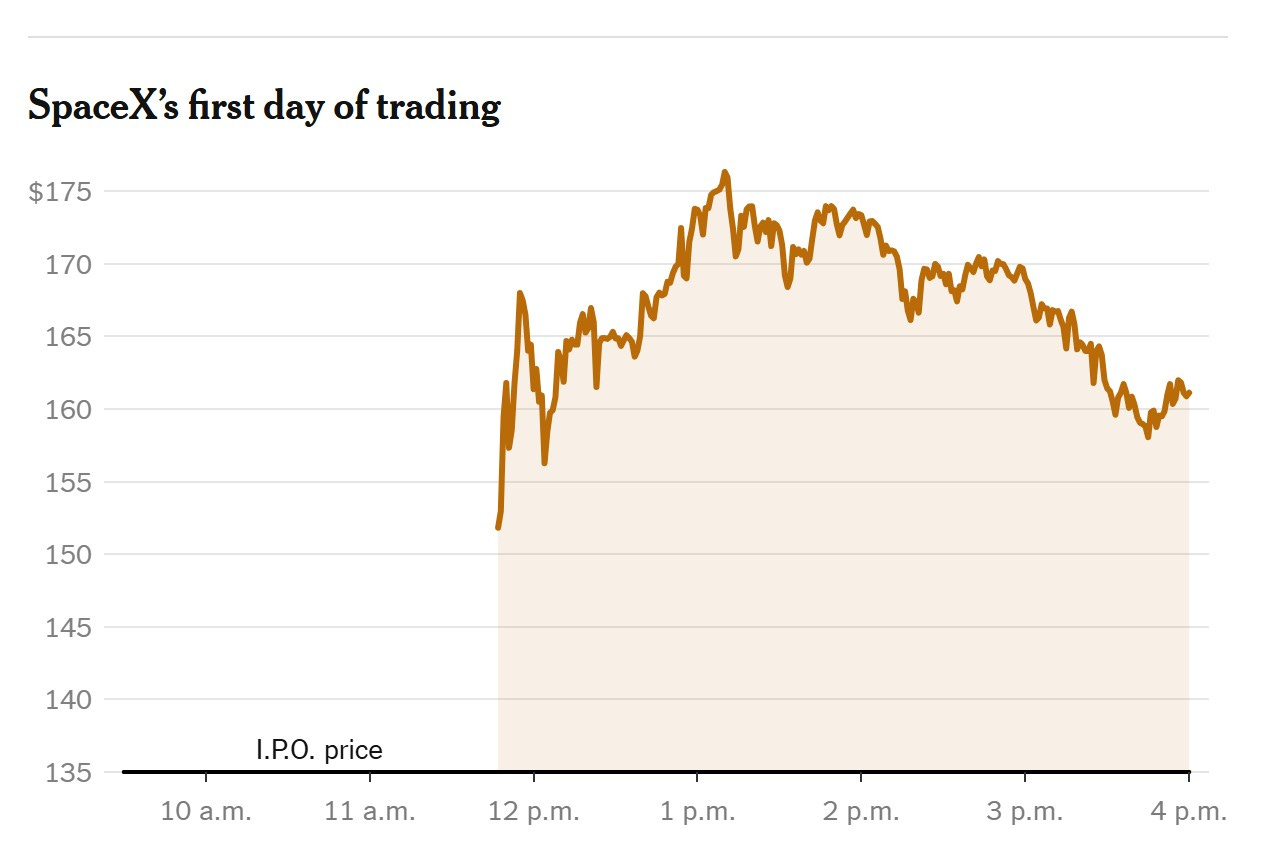
The company raised $75 billion by selling 555.6 million shares at $135 each — the largest IPO in history, more than every other US IPO combined over the past two years.
By the end of the first trading day, shares had surged 19% to roughly $161, valuing SpaceX at approximately $2.1 trillion.
And yes, Elon Musk became the world’s first trillionaire.
The S-1 was confidentially filed on April 1st with a valuation target that jumped from $1.75 trillion to over $2 trillion during the roadshow. The confidential filing process itself drew scrutiny, it allowed SpaceX to avoid the kind of public disclosure that typically accompanies an IPO this size.
The bigger picture: This isn’t just about SpaceX or Musk. Combined with OpenAI’s S-1 filing last month ($1T target), Anthropic’s rumored $380B valuation, and the broader stampede of AI-adjacent companies heading to public markets, we’re witnessing a capital formation event unlike anything since the dot-com era.
Xi Jinping Goes to Pyongyang: Nuclear Weapons Off the Agenda
On June 8-9, Chinese President Xi Jinping made his first visit to North Korea in seven years, and his first overseas trip of 2026. He met with Kim Jong Un, toured the Workers’ Party Central Cadres Training School, and participated in a series of symbolic events marking the 65th anniversary of the China-North Korea mutual defense treaty.
The two sides agreed to deepen cooperation across a sweeping range of areas: trade, agriculture, construction, science and technology, healthcare, education, culture, tourism, and people-to-people exchanges. Xi called for injecting “powerful momentum” into bilateral ties and pledged unwavering support for Kim. North Korea’s readout said the two leaders “reached a satisfactory consensus of views”, alignment language that was conspicuously absent from their last summit in September 2025.
Denuclearization wasn’t brought up though. Neither side’s official readout mentioned it. Not once. This was the same week that North Korean state media released images of a new nuclear facility and Kim ordered missile production expanded 2.5x over the next five years. Days before Xi’s arrival, Kim Yo Jong, Kim’s sister and a senior party official, publicly called US claims of a shared denuclearization goal with China “fake information.”
Xi’s decision to not raise denuclearization, despite the US State Department reaffirming just days earlier that Trump and Xi had agreed on it during their May summit, amounts to tacit Chinese acceptance of North Korea’s nuclear status. As ISW put it: the omission “could represent tacit PRC acceptance of North Korea’s nuclear status.” At the same time, these types of discussions may be behind scenes as is more culturally appropriate for the two nations.
We can understand that this visit was about Beijing managing its alliances. China is pulling North Korea back into its orbit after Kim’s deepening ties with Russia, who elevated their relationship to what both sides now call an “alliance.” Beijing doesn’t fear being replaced by Moscow as Pyongyang’s primary patron, but it may be uneasy about Kim cultivating a second great-power backer. Xi’s trip was partly preemptive: Trump has openly expressed interest in meeting Kim again, and if Beijing anticipates a possible Trump-Kim summit, it wants to get ahead of it. After all, Xi didn’t start meeting with Kim until 2018, after Trump first announced plans to do so.
North Korea is approaching this relationship from a position of greater confidence than at any point in recent years. It has Russia as a formal ally, China reengaging at the highest level, and a nuclear arsenal it’s actively expanding. The sanctions regime is weakening. And this visit may effectively signals that the world’s second-largest power is comfortable with that reality.
For the US, South Korea, and Japan, this is a problem. The question isn’t whether North Korea will give up its nukes, it won’t. The question is whether the US-ROK-Japan alliance can build a deterrence framework that accounts for a nuclear North Korea backed by China and Russia as permanent features of the geopolitical landscape.
Trump Wants a Piece of the AI Companies
On June 5th, Trump told reporters he’s considering the US government taking equity stakes in top AI companies.
He compared it to the government’s 10% stake in Intel last year, saying he expects to meet the leaders of top AI companies “next week” to discuss the idea. The administration has already taken stakes in Intel and other companies, but extending that model to frontier AI labs would be unprecedented.
Tech stocks actually gained on the news, the market read it as a signal that the government views AI companies as strategically vital enough to invest in directly, which implies favorable regulatory treatment.
If the US government holds equity in AI companies while simultaneously regulating them, issuing export controls on their models and relying on them for national security applications, the line between regulator and investor becomes blurred. This is the kind of state-corporate entanglement that Dario Amodei’s essay, may allude to in explicitly warned about when he wrote that “AI will soon become so capable that I worry it cannot safely be fully entrusted to either governments or companies, and there must be checks and balances on each.”
A meeting between Trump and AI industry leaders is being planned, which would be the first direct negotiation between the White House and frontier AI labs about government ownership stakes. If that meeting happens, watch what gets traded: regulatory relief in exchange for equity? Export control exemptions in exchange for government access? The details will matter enormously.
Fail of the Week: Meta’s AI “Gulag”
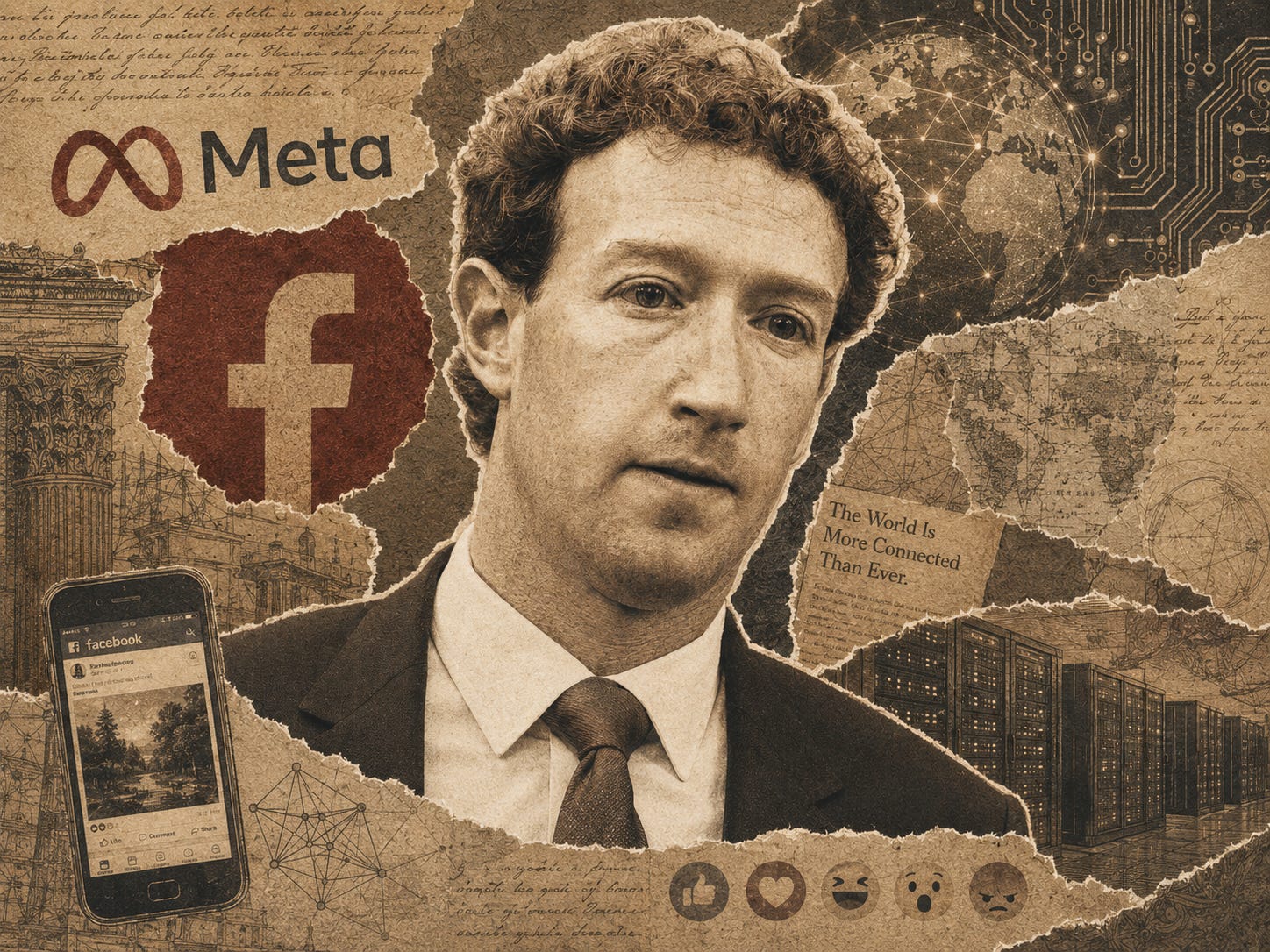
On June 12th, reports surfaced that Meta’s three-month-old “Applied AI unit” a 6,500-person division created to train AI models, is on the verge of internal revolt.
Engineers drafted into the unit described the work, primarily generating puzzles and coding problems to train AI models, as “soul-crushing.” One employee told reporters: ”It’s literally the gulag.” The term stuck. Around 1,600 employees signed an internal protest letter demanding changes to working conditions and the nature of the work.
“Tell Him He’s a Piece of Sh*t.”
This is the same Meta that cut 8,000 jobs last month while redirecting spending to AI. The engineers stuck in the Applied AI unit weren’t hired for this work, many were reassigned from other teams, pulled into repetitive data-labeling and training-data-generation work that they view as far below their skill level. And then Zuck’s mega-yacht sailed into Seattle.
Meta is spending tens of billions on AI infrastructure while simultaneously burning through the goodwill of the very people who are supposed to drive their bid in the AI gold rush. Two weeks ago, the Pope warned about “having more without being more.” We’re seeing that now.
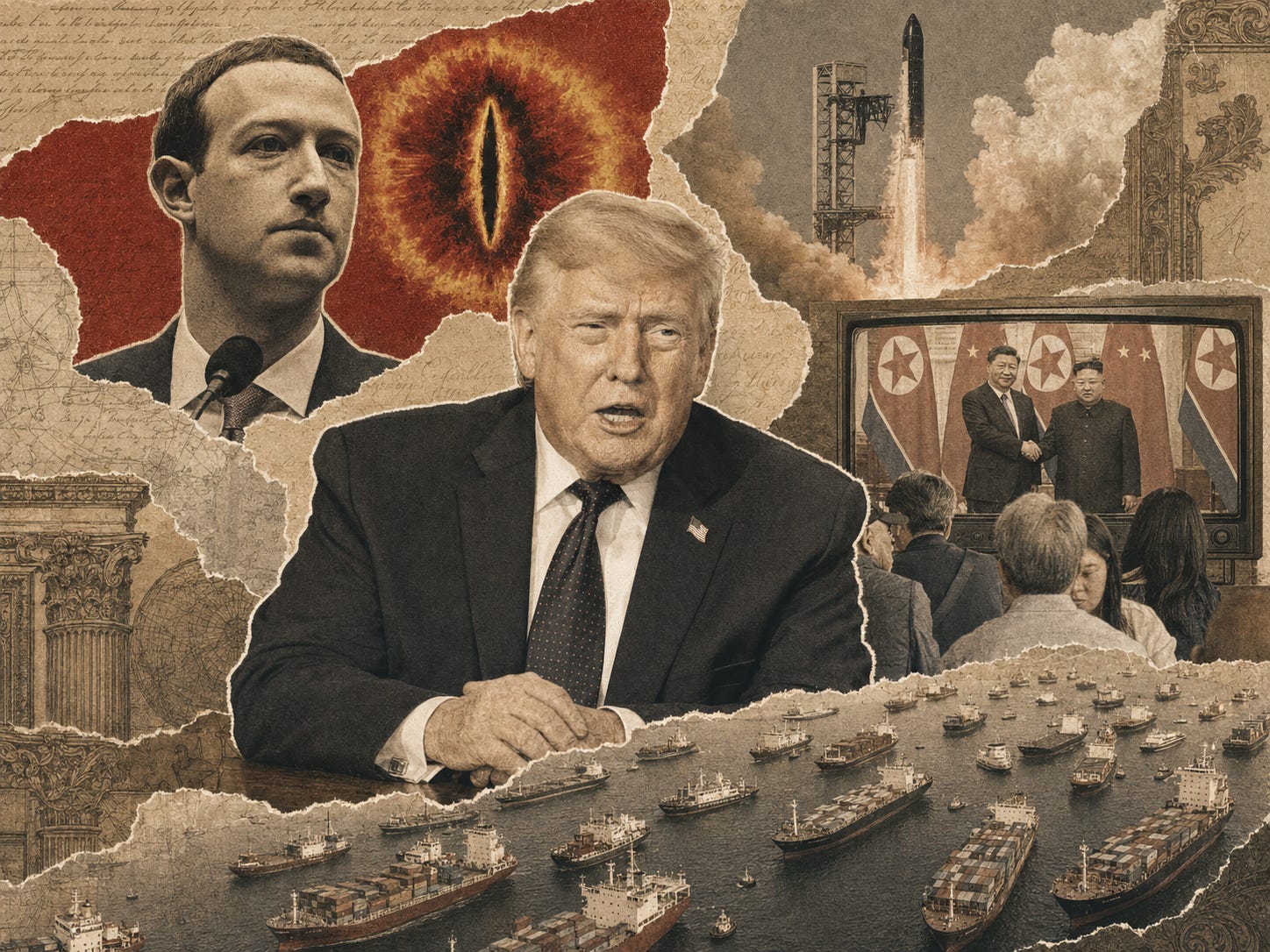
In the past, Mark Zuckerberg has openly shared that some of his employees referred to him as the “Eye of Sauron”. And while at least Zuckerberg seems to be aware of the potential harm his Eye of Sauron could do, he is consistently hellbent on pushing his agenda, even if it seems, some fall victim to his Eye of Sauron.
Will it be that “There Is Only One Lord Of The Ring, Only One Who Can Bend It To His Will, And He Does Not Share Power” ? We shall see~
This Week in Power is a weekly series. Come back next Monday!