

Week of June 2–9, 2026 | Briefing #2
Welcome to the second edition of This Week in Power — a weekly briefing on the stories that actually matter at the intersection of AI, technology, geopolitics, and the people pulling the levers.
Here’s your briefing on what happened, why it matters, and what it tells us about where power is shifting.
In brief — Unique connections across politics and business of AI this week. A socialist and a populist president agreed on nationalizing Big Tech. The administration closed a chip loophole that may have quietly been feeding China’s AI buildout. And the most important federal AI bill in years dropped to immediate condemnation from both labor and consumer groups.
Let’s get into it.
Trump Signs the AI Executive Order
Two weeks after publicly pulling back from signing an AI and cybersecurity executive order because he didn’t like “certain aspects” of it, Trump signed a revised version on June 2. The order, titled “Promoting Advanced Artificial Intelligence Innovation and Security,” is structurally similar to the draft that almost became law in May — but with real teeth removed.
The core mechanism: companies developing frontier AI models can voluntarily submit those models to federal agencies for security testing up to 30 days before release. The government can then weigh in on which “trusted partners” get early access.
The operative word is voluntarily. The final text explicitly states the order cannot be interpreted as authorizing “mandatory governmental licensing, preclearance, or permitting” for AI development. A company can simply decline to participate. AI and crypto czar David Sacks pushed to shorten the review window and make the entire framework voluntary, and the final text reflects exactly that.
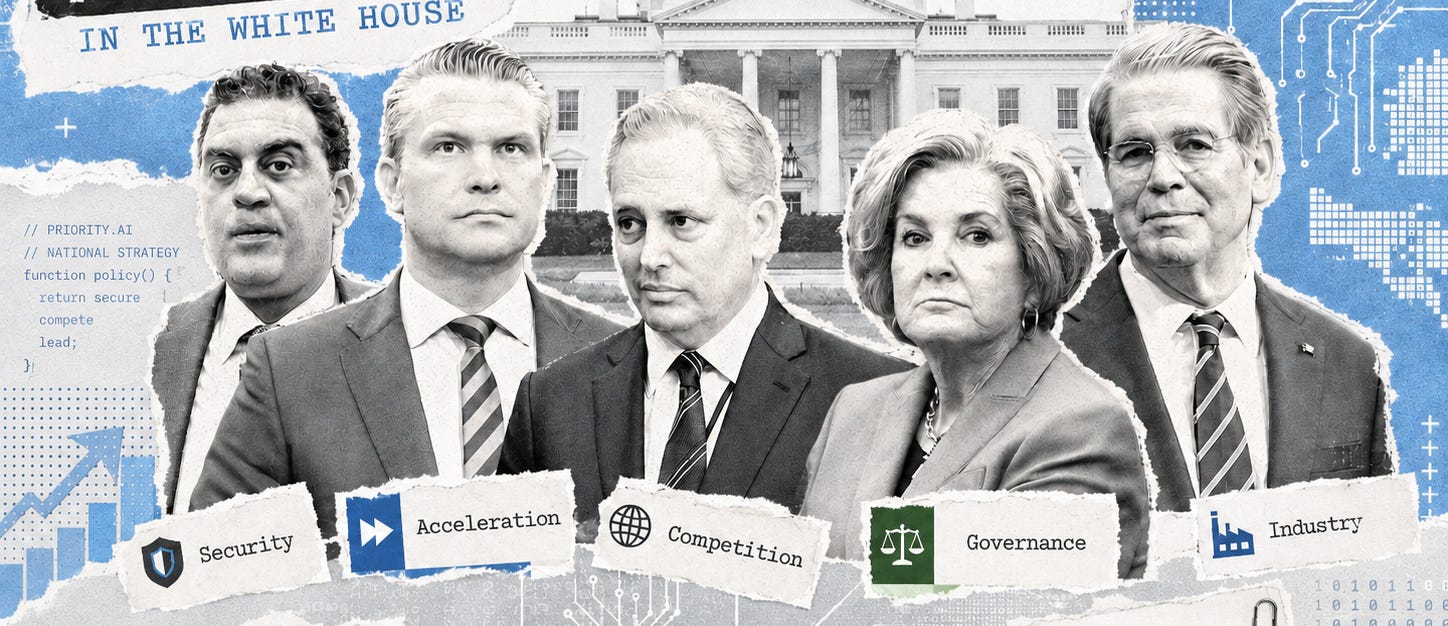
It’s key to note that there are three main factions in the White House. One is led by AI Czar David Sacks who favors hands-off pro-innovation approach; the second faction is led by Secretary of Defense Pete Hegseth, who is lobbying for tighter restrictions on frontier AI models such as Claude Mythos with security concerns related to potential weaponization by foreign adversaries in mind; and the third faction, reportedly is headed by White House Chief of Staff Susie Wiles and Treasury Secretary Scott Bessent, who lobbied for a regulatory framework that was borne in the new executive order where companies voluntarily provide the U.S. government with a first look at new models, which a) provides political and legal defense to the White House of claims of irresponsibility should something go awry in the world of AI development, and b) opens the door for government-led regulation discussions where lobbying by AI companies have instead led policy decisions to this point. Ultimately the current EO serves less as an enforcement and true guidance document, and more as political and legal protection alleviating complete burden to the White House and moving it onto AI companies given the voluntary nature.
DC, even beyond the White House, has largely been frozen without clear leadership on what AI policy and governance should look like, and the direction the country should move in.
Congress Drops a 269-Page AI Bill

Two days after the executive order, on June 4, Representatives Jay Obernolte (R-CA) and Lori Trahan (D-MA) released a discussion draft of the Great American Artificial Intelligence Act of 2026, a bipartisan attempt at the first comprehensive federal AI framework.
The headline provision: a three-year preemption of state laws governing how AI models are developed (not deployed). States keep the right to regulate AI use within their borders, but lose the ability to legislate on how these systems are built. The rationale from co-sponsor Congresswoman Erin Houchin: “America should lead the world in artificial intelligence, not regulate ourselves into falling behind China through a patchwork of fifty different state laws.”
Labor and consumer groups were in immediate, sharp opposition. The AFL-CIO and American Federation of Teachers called it “a giveaway to the AI industry and a handful of trillion-dollar companies, at the expense of American workers.” Public Citizen went further, calling it “a disastrous proposal that Big Tech is celebrating.”
Closing the China Chip Loophole

On May 31, in a rare weekend move, the Commerce Department’s Bureau of Industry and Security posted guidance clarifying that export licenses are required for advanced AI chips shipped to any entity whose ultimate parent company is headquartered in China, regardless of where that entity is physically located.
The reason they had to issue it: for roughly a year, a compliance gap may have allowed Chinese-owned subsidiaries in Malaysia, Singapore, and the UAE to purchase Nvidia Blackwell GPUs and AMD MI350X processors without triggering US export controls. Hundreds of thousands of chips potentially flowed through those pass-through jurisdictions while Washington believed direct shipments to China were restricted.
Senators Elizabeth Warren and Andy Kim accused the administration on June 2 of “passively watching” chips flow to Chinese military-linked entities.
Senators urged tighter rules on contract chipmakers supplying Chinese firms’ overseas units, warning about remaining loopholes around subsidiaries and front companies.
A Unique Potential Coalition between Sanders, Trump, and Sam Altman
Bernie Sanders announced the American AI Sovereign Wealth Fund Act on June 2, a bill that would impose a one-time 50% tax on large AI companies, paid in shares, depositing the equity into a public fund giving ordinary Americans voting rights, board representation, and eventually, a dividend. The bill argues that AI is built on collective human knowledge, without compensation to the public, and the resulting wealth concentration is without modern precedent.
Trump expressed openness to the idea of the public sharing in AI company upside. On June 5, Trump told reporters aboard Air Force One that the US government should become a “partner” in AI companies and that executives from OpenAI, Anthropic, and xAI would visit the White House to discuss the idea. “There’s something very interesting about it, where it almost becomes a partnership with the American public,” Trump said. When reporters noted the proposal echoed Sanders, Trump said the economic views of his voters and Sanders voters “aren’t that far apart.”
Fail of the Week: Sam Bankman-Fried Presidential Pardon
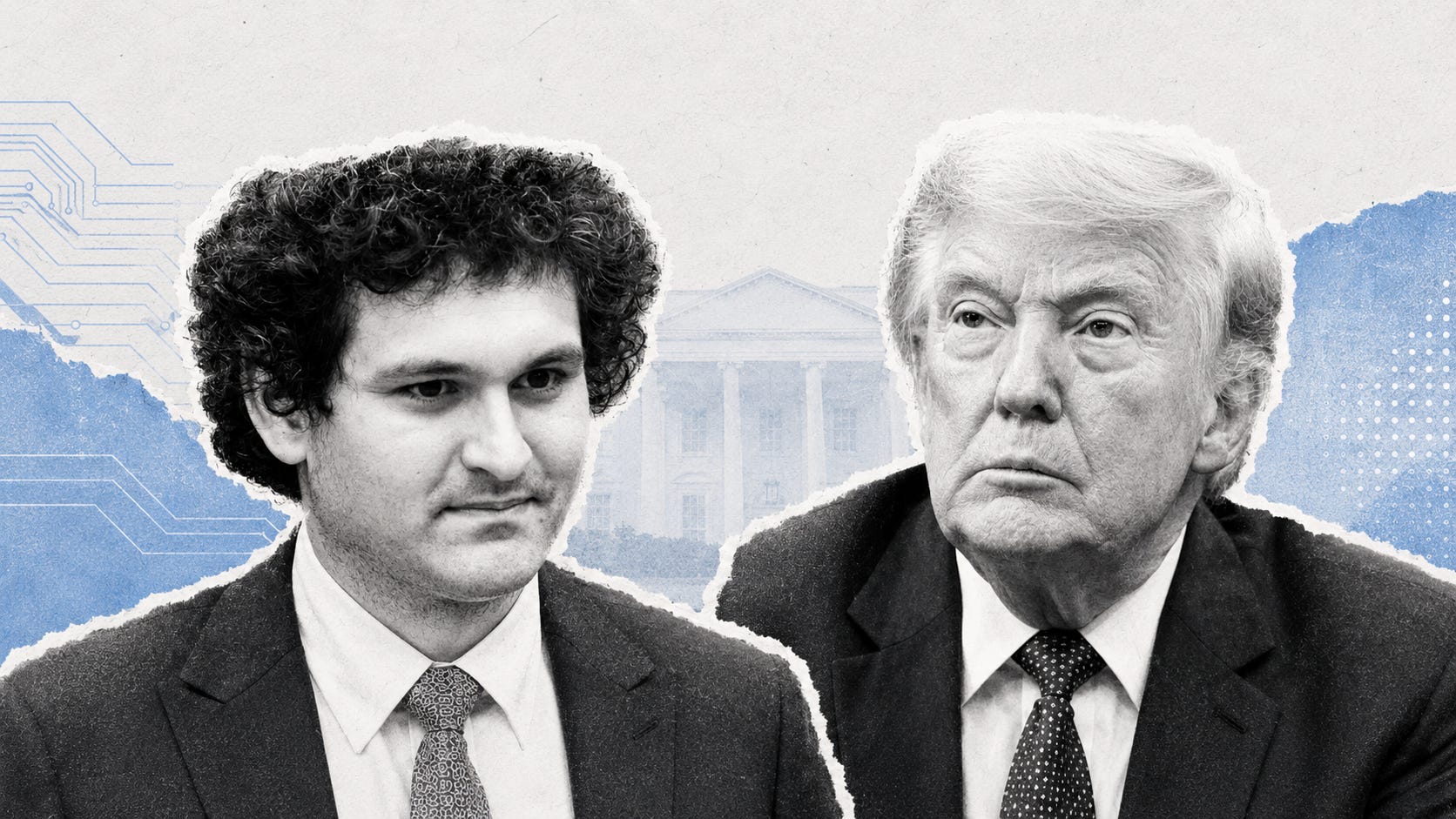
Sam Bankman-Fried once worked to make crypto look respectable in Washington. Now, from prison, he is seeking a different kind of political relief. This week, Bankman-Fried has formally applied for a presidential pardon while currently serving a 25-year sentence for fraud and conspiracy tied to the collapse of FTX. His request is pending with the Justice Department’s Office of the Pardon Attorney.
Trump reportedly said in January that he had no plans to pardon Bankman-Fried, though Bankman-Fried has appealed his conviction and continues to maintain that he made management mistakes rather than stole funds, but prosecutors said billions in customer money were misused. Sam Bankman-Fried also allegedly considered paying Trump $5 billion not to run for president, Michael Lewis told ‘60 Minutes’.
The fail is not that he asked for clemency. People in prison seek clemency all the time. The real failure is that Bankman-Fried’s story still depends on the same currency that powered his rise: access. FTX collapsed as a financial scandal, but his pardon request turns the ending into a political test of who can still get a hearing. In a week dominated by AI companies seeking softer rules and closer ties to Washington, it’s a reminder that tech power often survives longest as a question of proximity.
Is it not?
This Week in Power is a weekly series. Come back next Monday.